

Jena Is Committed to Sustainability
The city of Jena presents itself as an international and cosmopolitan city. There are many grassroots initiatives that address issues of fair trade, sustainable consumption, and climate protection, and they are doing outstanding work. Together with active development policy stakeholders, the city of Jena is focusing on expanding municipal development cooperation. At its core, this includes promoting fair trade, local development-oriented educational activities, and close cooperation within the framework of city partnerships in the Global South. The city partnership with San Marcos in Nicaragua deserves special mention here.
Fair Daycare Centers in Jena
On June 13, 2019, the German Red Cross (DRK) preschool “Sternschnuppe” became the first preschool in Jena to officially receive the “Faire Kita” certification. This also made it the first “Faire Kita” in Thuringia. The title is awarded by the “Faire Kita” project office of the “Faire Metropole Ruhr” network for an initial period of three years. After 2022, the “Sternschnuppe” daycare center was once again awarded the “Faire Kita” certificate in 2025 and is authorized to use this designation for another three years. The “Fair Daycare Center” designation recognizes the dedication and work of the educational staff, who address issues such as environmental and climate protection, fair trade, and global peace and help children understand these topics.
The “Sternschnuppe” daycare center has also maintained a partnership with the “Maribel Molina” preschool in San Marcos, Nicaragua, for several years, further enriching the more than twenty-year-old city partnership between Jena and San Marcos. Through their work, the staff of Eine-Welt-Haus e. V. contributed significantly to the success of this project and the certification.
You can find more information about Jena’s first “Fair Daycare” here.
The German Red Cross (DRK) facility “Bummi” also received the “Fair Daycare” certification in 2019 and was successfully recertified in 2023. Together with Eine-Welt-Haus e. V., they develop projects, implement their own ideas for climate protection, and promote awareness of sustainable and equitable living. For example, the children participate in their own children’s council or have founded their own “energy police” to conserve electricity.
You can find more information here.
Sustainable Homework Booklet "Möhrchenheft"
2014–15 School Year
Starting with the 2014–15 school year, a joint sustainable homework booklet (Möhrchenheft) was offered free of charge to all elementary school students in the cities of Erfurt, Weimar, and Jena. In Jena, 3,700 booklets were distributed to schools that wished to use them. Topics in the areas of sustainability, climate protection, and fair trade—presented in a child-friendly manner—are designed to inform, raise awareness, and inspire. Children can connect these topics to their everyday school life and explore them either at school or at home. The mascot “Kiki Karotte” guides readers through the workbook.
In June 2014, the workbook received the Climate Protection Award from the Jena-Thuringia Climate Protection Foundation. The project has also already attracted interest at the federal level. As an exemplary educational project for sustainable development, it received the “Werkstatt N Quality Seal” in 2015, which recognizes outstanding sustainability initiatives. The quality seal is awarded by the German Federal Government’s Council for Sustainable Development.
2015–16 School Year
Another edition was published for the 2015–2016 school year, this time focusing on “Fair Trade.”
2016–17 School Year
The third edition, on the topic of “Energy and Climate,” was developed for the 2016–17 school year. In addition to the cities of Erfurt, Jena, and Weimar, the Ilm District as well as the city and district of Nordhausen also participated. As a result, the Möhrchenheft is reaching more and more elementary schools in Thuringia.
School Year 2017/18
For the 2017–18 school year, the fourth edition on the topic of “Biodiversity” was published. In addition to the cities and districts that had already participated, the city and district of Gotha also joined the initiative. In addition, there are interested teachers and parents from other areas who have seen the booklet at friends’ homes and are eager to get their hands on a copy.
2018–19 School Year
For the 2018–2019 school year, another edition was published on the topic of “the environment.” The Möhrchen booklet was nominated for the 2017 Audience Award of the German Local Sustainability Prize (ZeitzeicheN Prize) and also received its own website.
School Year 2019/20
The new edition for the 2019–20 school year was created on the topic of “Fair Trade” and could not be delivered until just before the start of school, rather than before the summer break as usual. There were production-related delays that we unfortunately could not control.
2020–21 School Year
For the 2020/21 school year, a new edition on the topic of “Energy and Climate Protection” has been developed and has already been distributed to the schools in Jena that had requested it. This allows children to learn how important a healthy climate balance is, where energy is needed everywhere, and how they can conserve it.
School Year 2022/23
For the 2022–23 school year, the booklet also includes a special section on “wetlands, ” a topic covered by the Thuringia Nature Conservation Foundation. Across 10 illustrated thematic pages, the content is presented in an engaging way and conveyed in a fun manner. This allows children to learn where chocolate comes from, how electricity powers a light bulb, what happens to a plastic bag in the ocean, or which regional and seasonal fruits and vegetables are in season each month. Topics such as “Animal Husbandry and Conscious Eating, ” “Mobility and the Commute to School, ” “Urban Gardening,” and “Ownership, Sharing, and Giving” are also intended to lead to new insights and stimulate discussion. Many elements are also designed to encourage painting, crafting, discovery, and exploration. This makes sustainability tangible and involves the wider community, teachers, and parents as well.
2023–24 School Year
How do you educate elementary school students about sustainability? What exactly is fair trade? Where are my jeans made, and where do bananas come from? During the 2023–24 school year, elementary school students in Jena received comprehensive information on these and other questions through the sustainable homework notebook “Möhrchenheft.”
School Year 2024/25
The focus of this edition is on the topic of “the environment.” The workbook explains what sustainability is, why plastic is bad for your stomach, and why cows want to go for walks, too. In addition to the typical functions of a homework notebook, the “Möhrchenheft” also includes ten thematic pages with a variety of tips and regional contact points, as well as game and craft ideas to further explore the content.
School Year 2025/26
This year, the Möhrchenheft focuses on the topics of “Climate and Energy.” In addition to plenty of space for homework, children will find numerous tips on saving electricity, information about the difference between weather and climate, and practical suggestions for a climate-friendly commute to school.
School Year 2026/27
In the 2026–2027 school year, elementary school students in Jena will once again receive the sustainable Möhrchen homework notebook. A total of 2,001 workbooks were distributed to participating schools in the city. This year, the Möhrchen workbook focuses on the theme of “Fair” and highlights, in particular, the areas of fair trade, global justice, and sustainable consumption. In addition to ample space for homework, it offers children age-appropriate information on fair-trade products, insights into global supply chains, and practical tips for living a more conscious daily life. Of particular note are the removable harvest calendar and the “Globalization” theme poster. In this way, the project also makes a concrete contribution to the City of Jena’s commitment as a Fairtrade City.
Fairtrade "San Jena" Coffee
The fair-trade coffee "San Jena" is Jena'sofficial city coffee anda visible symbol of the sister-city partnership between Jena and San Marcos in Nicaragua.
- Origin: Cooperatives in northern (Boaco) and central Nicaragua
- Growing altitude: 700–1,200 meters
- Variety: Arabica (Bourbon, Caturra)
- Flavor: Nutty, chocolate
- Availability: ground, whole bean, espresso
The project was initiated by Eine Welt Haus Jena e. V. The Cafe Chavalo cooperative in Leipzig imports the sister city coffee. Since “San Jena” is sourced directly from the producers, there are no middlemen. This ensures that as large a portion as possible of the sales proceeds goes directly to the producers.
In addition to these benefits, the project organizers are committed to high social standards: With this sister-city coffee, consumers not only receive a product with exceptional flavor, but also a beverage that is fairly and sustainably produced and transported in an environmentally friendly manner. Furthermore, purchasing “San Jena” supports the education of young people in San Marcos (Nicaragua).
You can find more information here.
Jena's Paradies Chocolate—a Sweet Ambassador for Fair Trade
On November 4, 2016, the Jena City Chocolate was officially unveiled at the Jenaplan School. At the launch event, the store manager of the CONTIGO Fairtrade Shop presented the new chocolate bar, which has been produced under fair trade conditions from the very beginning.
The idea of a “city chocolate”—which had already been successfully implemented in other cities within the CONTIGO Group—was to be brought to life in Jena as well, but with a special local touch. Therefore, CONTIGO approached the Jenaplan School with a request to have students design the packaging. Despite the tight timeframe between the fall break and the Christmas shopping season, the students took on the challenge with great enthusiasm and some even continued working on it in their free time.
From numerous creative designs, Floris Hansberg’s motif was ultimately selected. Her design depicts Jena as she perceives her hometown: young, vibrant, full of life—and with Paradiespark as a green oasis at its heart. The winning design has since adorned the packaging of the Jena Paradies bar.
The chocolate is produced at the Austrian chocolate factory Zotter, which developed a special blend exclusively for Jena. Thus, the Paradies chocolate combines exquisite flavor, artistic creativity, and the values of fair trade—a sweet calling card for Jena.
Jena's Change Map—The Alternative Guide to Sustainable Consumption
Sustainability means taking the long-term consequences and impacts of our actions into account when making decisions. Sustainability means showing respect and taking responsibility for our future. The city of Jena has also made it a priority to act sustainably. For this reason, areas of action and measures have been developed to help promote sustainability. Jena has also been a Fairtrade City since 2012—a title that continually inspires us to make the world a little more just.
Our everyday actions not only influence local life but also affect the climate, nature, animals, and the living and working conditions of people worldwide. Through our individual sustainable consumption—taking social and environmental aspects into account when purchasing and using products and services—we can contribute to global, sustainable development every day. Among other things, this means shopping mindfully, fairly, seasonally, and regionally, as well as making use of e consumption options, such as food sharing or repair initiatives. Responsible and sustainable consumption also means living and shopping in a way that ensures our well-being—and that of others—well into the future.
The free Jena Transformation Mapoffers one way to do this . This digital city map provides a comprehensive overview of sustainable, fair, and community-oriented initiatives, businesses, and gathering places in Jena. In this way, the map contributes to the city’s sustainable transformation and supports Jena’s path to climate neutrality by 2035—in a practical, everyday way. It shows ways to meet personal needs in a resource- and climate-friendly manner and makes sustainable consumption more accessible. To achieve this goal, initiatives and services, locations, and opportunities for interaction are documented and mapped. The “Wandelkarten” were first conceived in 2016 by a group of young volunteers and produced as printed maps for the cities of Erfurt, Weimar, and Jena. Inspired by this, the “Karte von Morgen”—now known nationwide—was created shortly thereafter. The new “Map of Change” is part of a networked map ecosystem. At its core, the digital “Map of Change” project is being developed in collaboration with theThuringian Sustainability Map, the“Map of Tomorrow,” and the cities of Erfurt and Weimar.
Fashion Protest Jena
Who designs my clothes? How does fashion affect me? Do we have to follow every fashion trend? Where are my clothes made, and what are the working conditions like there?
The One World Network Thuringia e. V. and the Nachhall agency are addressing these questions through lectures, films, and discussions at various events.
In 2015, at the start of the four-month “Fashion Protest Jena” campaign—which ran from January through April—a thematic kickoff event on the topic of “Global Textiles” took place on January 19, 2015, at the Haus auf der Mauer. Following an introduction by UNICEF Jena on children’s rights and child labor in the textile industry, Anke Günther (FemNet e. V.) gave a presentation on Sumangali. Interactive elements and a lively discussion rounded out the event.
- The main initiative, however, was the “Clothing Detox,” designed to help participants reflect on and reduce their personal habitual overconsumption of clothing.“modeprotest’s” recommendation for this reduction exercise is: Select 50 items from your own wardrobe and pack away the rest for just under 7 weeks. The goal is to develop an awareness of your own needs. Let’s challenge ourselves: Can we resist the fashion industry’s dictate to change outfits every day?
- On February 5, 2015, at 4:00 p.m., the kickoff event for the “Clothing Detox” took place at the “Nähcafé – Kombinat für textiles Recycling” (Kassablanca Gleis 1). After a brief introduction to the topic of clothing consumption, participants had plenty of time to discuss overconsumption of clothing and minimalism.
- On March 9, 2015, an interim evaluation of the “Clothing Detox” took place at EWNT. Afterward, participants watched a documentary highlighting the terrible production conditions in Asia.
- On March 14, 2015, the women’s flea market was held at SOBAEXA Coworking at Carl-Zeiß-Platz 3.
- As a moving finale, a flash mob took place at the Holzmarkt on April 24, 2015, to mark International Fashion Revolution Day.
As part of Intercultural and Fair Trade Week, a movie night featuring the documentary "The True Cost" at the Kino am Markt, and on September 27, 2016, at 7:30 p.m., a reading by author Gisela Burckhardt on the topic "Todschick—Luxury Labels, Cheap Fashion, Inhumanly Produced" took place at the Ernst-Abbe Library (more information can be found under Links).
As part of “Fashion Revolution Week 2019,” the One World Network Thuringia, together with its partners, once again organized an interesting series of events. For one week, various activities, offerings, and formats drew attention to the human rights situation and working conditions in the global textile industry.
Due to the COVID-19 pandemic, “Fashion Revolution Week 2020” took place primarily online. Each day from April 20 to 26 was dedicated to a different key topic to raise awareness of the various aspects and impacts of the global textile industry.
On August 21, 2026 , the participatory event “Fair Fashion, Join In!” at Stadtlab Jena focused on the topic of fair trade. Together with the Eine-Welt-Netzwerk Thüringen e. V. and the UmsonstHaus im MobB e.V., the city invited participants to explore the social and environmental impacts of global textile production. Through short presentations, discussions, and interactive activities, participants explored fair supply chains, sustainable consumption, and ways to make their own clothing choices more conscious. The clothing giveaway organized by UmsonstHaus Jena was very well received. Well-preserved garments changed hands, serving as a practical example of resource conservation and the circular economy. The event made it clear that fair trade and sustainable consumption begin in everyday life and that everyone can contribute.
Thuringia-wide MISSION REUSABLE
Switch from Single-Use to Reusable Packaging for Takeout Food and Beverages
Together with fourteen other municipalities in Thuringia, Jena will participatestarting June 1, 2022, in the Thuringia-wide information campaign MISSION MEHRWEG, which aims to transition from single-use to reusable packaging for takeout food and beverages, and will help raise awareness among restaurants and consumers in order to conserve resources and make our environment cleaner. Behind MISSIONMEHRWEG is the association Zukunftsfähiges Thüringen e. V. The association is a statewide umbrella organization for sustainable development and serves as a working and action platform for initiating and implementing sustainability processes and related opportunities for public participation.
Jena’s participation in MISSIONMEHRWEG is part of the City of Jena’s municipal commitment to greater environmental and climate protection. The goal is to further reduce the consumption of single-use packaging and to raise awareness of reusable options as a simple and effective measure in everyday life. Through this campaign, the city has been supporting the transition to a sustainable circular economy since 2023 and placing greater emphasis on climate-friendly alternatives.
Rising Waste Volumes from Single-Use Takeout Packaging
Takeout food and beverages have been very popular, and not just since the COVID-19 pandemic. According to information from the federal government, 770 metric tons of packaging waste from single-use takeout containers are generated daily in Germany. The disposal costs for single-use packaging from takeout food and beverages in public spaces and parks are also rising along with the volumes, as are energy and resource consumption and the burden on the environment and climate.
Reusable Packaging Instead of Single-Use Plastic
Environmentally friendly reusable packaging offers a solution to the rising volumes of waste. Using reusable packaging instead of single-use plastic reduces CO2 emissions, prevents the thoughtless consumption of resources, and cuts down on non-recyclable composite materials.
Promoting reusable products is therefore a significant contribution to environmental protection at the local level. A reusable system systematically supports consumers in making decisions that benefit the environment. According to research by NABU, reusable products are used over 50 times more often and consequently generate less waste and fewer emissions.
“Given the success of the MISSION MEHRWEG campaign throughout the city, we hope that reusable systems will gain greater acceptance in the future and become permanently established, and that many businesses in Jena will agree on a pooling system to make returns as easy as possible for customers,” said Christian Gerlitz, mayor and head of the Department of Urban Development and Environment.
Measures in Jena
The city of Jena has had a plastic-free concept for its markets and festivals since 2020:“Jena’s Markets and Festivals Plastic-Free—Support for Reusable Systems and Biodegradable Materials” (19/2240-BV). The city administration and the city-owned enterprises of Jena, in their capacity as the licensing authority for markets and events, are making a significant contribution to reducing plastic waste.
In addition ,a website on the topic of going plastic-freehas been launched, which explains the problems associated with plastic use, provides citizens with tips on how to reduce plastic consumption, and highlights alternatives to plastic products.
In addition, Jena, together with Erfurt and Weimar, has been offering updated “Wandelkarten”since 2023 . The goal of these “change maps” is to meet needs and demands in a way that conserves resources and protects the climate, thereby making sustainable consumption practical for everyday life and accessible citywide. To achieve this goal, initiatives and services, locations, and opportunities for exchange are documented and mapped.
Awareness-raising campaigns in the form of several poster campaigns in public spaces were also implemented in 2022, 2025, and 2026. Under the slogan “Travel sustainably—bring your own reusable tableware!” the city called on residents in 2026 to increasingly opt for reusable items over single-use ones in everyday life—for example, when getting coffee on the go, ordering takeout for lunch, or shopping. The corresponding designs were displayed in June 2026 on digital billboards and advertising columns throughout the city.
In addition, various informational and awareness-raising events on the topic of reusable items were held:
- November 1, 2022: Information event for Jena’s food service businesses at the Historic City Hall on the new provisions of the Federal Packaging Act and the possibilities for using reusable packaging
- March 13, 2023: Information event for Thuringian food service businesses focusing on hygiene and pooling systems, organized by Zukunftsfähiges Thüringen e. V.
- May 8, 2023: “Essen in Mehrweg” information booth in Jena in cooperation with Initiative Innenstadt Jena e. V.
Urban Pigeon Project
Pigeon houses reduce the pigeon population and associated mess
Since 2012, a program has been in place in Jena to reduce the urban pigeon population and the associated pollution caused by pigeon droppings. Managed pigeon houses enable birth control through the replacement of eggs with dummies, the proper disposal of droppings, and the care of the birds.
The urban pigeon project is a sustainable, animal-welfare-friendly, and effective solution for municipalities and property owners. Operating pigeon houses is a proven and animal-friendly approach to a problem that cannot be solved through deterrent measures. For more information, please visit the volunteer-run project website.
Pigeon Houses in Jena
The third pigeon house was opened in downtown Jena in the fall of 2024. This collaborative model is funded by the City of Jena as well as local institutions and businesses.
In addition, there are five other pigeon houses in Jena’s urban areas that are operated by the private sector or managed by volunteers. An overview of all managed pigeon houses is published on the project website.
Successful Implementation
The concept for reducing the urban pigeon population in a manner consistent with animal welfare is being successfully implemented in Jena. As a result, in recent years there has been a drastic reduction in contamination from pigeon droppings, as well as a decrease in the number of pigeons on rooftops, in pedestrian zones, and in shopping arcades. This has also led to lower costs for deterrence and cleaning measures.
Since the project began, a total of over 18,600 pigeon eggs have been replaced with dummy eggs in Jena. Several metric tons of pigeon droppings are removed from the pigeon houses each year, noticeably alleviating the burden on the surrounding area.
The Jena City Pigeon Project is regarded as a model nationwide. As a result, numerous cities have already sought information about Jena’s approach and expertise.
Contribution to Animal Health
Managed pigeon houses provide feral domestic pigeons with clean, weather-protected shelter and species-appropriate care, including grain feed and drinking water. Hygiene measures support the goal of maintaining a healthy pigeon population that is compatible with urban life.
Urban Gardening
Wenigenjena Community Garden
The Wenigenjena Community Garden has been in existence since 2021. The city has set aside approximately 1,500 m² of land next to the KGA Talstein (Wenigenjena-17-6/11) for this purpose. The area was originally designated for replacement gardens but, due to a lack of demand, was leased for other purposes and put to use for gardening.
Other Urban Gardening Projects in Jena
- Schiller’s Garden House: A student-led urban gardening project at the University of Jena, based on a seminar paper, that uses empty garden beds to grow healthy food and create spaces for people to gather. New participants are welcome; collaborations with Flussland are planned. More information is available here.
- Flussland: A paradise for urban gardening with plots on vegetable fields where you can harvest produce right on site—ideal if you don’t have your own garden. You can pick your own bouquets and pay for them. More information is available here.
- Intercultural Garden at the Jena Adventure Playground: The intercultural garden “Buntes Gemüse” was founded in 2015 at the Adventure Playground. We tend the garden together with our children and residents from the immediate neighborhood. There’s always something to hoe, weed, harvest, sow, snack on, smell, taste, feel, and enjoy… More information is available here.
- Polaris: The Polaris Youth Education Center in Jena incorporates urban gardening as a central component of its open-space program. In the garden, visitors can plant herbs, start upcycling projects, build furniture, or simply relax—with support in sourcing materials and technical know-how. More information is available here.
food sharing
In total, approximately 11 million metric tons of food waste are discarded each year in Germany along the food supply chain.
According to the German federal government’s first report on food waste from 2022, the vast majority of discarded edible food—such as peels, leaves, bones, or coffee grounds—came from private households (about 59%). Another 17% of food waste was generated in restaurants, institutional food service, or catering, followed by about 15% in food processing, around 7% in retail, and approximately 2% in agriculture. According to a study by the Thünen Institute, surplus and spoiled food in agriculture is usually not disposed of as waste but rather utilized on-farm (Source: Federal Ministry of Food and Agriculture).
The report to the European Commission was prepared by the Federal Statistical Office and several research institutes on behalf of the Federal Ministry for the Environment—which is primarily responsible for waste legislation—and the Federal Environment Agency. The Federal Ministry of Food and Agriculture closely monitored this process (Source: Federal Ministry of Food and Agriculture).
Foodsharing Movement
Foodsharing is an initiative founded in 2012 that advocates for the responsible use of resources and a sustainable food system. Its primary goal is to end food waste.
Why? Because it’s not just about the food that gets thrown away, but also about the waste of energy, time, and resources required, for example, for cultivation, harvesting, packaging, transportation, and storage. According to a WWF estimate, 10% of all global greenhouse gas emissions are caused solely byfoodwaste. This waste occurs throughout the entire value chain: during cultivation, harvesting, processing, sale, and at the end consumer.
Foodsharing raises awareness of this issue among all stakeholders with whom the initiative comes into contact. Through various campaigns, we draw attention to the incredible waste in society and offer potential solutions. The goal is to foster education, a shift in mindset, and responsible action on both a personal and political level to promote an appreciation for food and greater sustainability.
With over 450,000 registered users and more than 100,000 volunteers—known as “FoodSavers”—the initiative has now become an international movement. Over 11,000 businesses are participating, and so far, 65 million kilograms of food have been saved from waste. About 5,000 additional pickups take place every day.
The foodsharing.de platform is based on volunteer efforts. Saving and sharing food takes place without any monetary exchange. The nonprofit organization foodsharing e. V., as the umbrella organization and operator of the website, ensures that it remains noncommercial and free of advertising (Source: Foodsharing e. V.).
Food Sharing in Jena
In Jena, about 150 people organize 250 pickups each month. The so-called “Foodsavers” save just under 1 metric ton of food per week and deliver it to the “Fair-Tealers.” At the same time, various working groups are active in encouraging new businesses to participate, conducting educational outreach, and training new members.
One “Fairteiler” is located at the Grünes Haus (Schillergäßchen 5); in addition, public distributions take place on weekdays:
- Tuesdays starting at 4:15 p.m., DRK Senior Center, Ernst-Schneller-Straße 10
- Wednesdays starting at 4:30 p.m., Wenigenjena District Council, Karl-Liebknecht-Straße 30
- Thursdays starting at 4:15 p.m., Winzerla District Office, Anna-Siemsen-Straße 49
- Fridays starting at 4:30 p.m., Magdelstube, Magdelstieg 23
For more information, visit foodsharing Jena.
The City of Jena is committed to placing a higher value on food and reducing food waste. As a symbol of the partnership between foodsharing Jena and the City of Jena, the two partners have signed a statement of intent (see Downloads).
Foodsharing Media Coverage
The foodsharing initiative is occasionally featured in the local media. The COVID-19 pandemic also posed major challenges for the foodsharing initiative. Under “Links,” you’ll find various media reports on the foodsharing Jena group, including coverage of its activities during the COVID-19 restrictions.
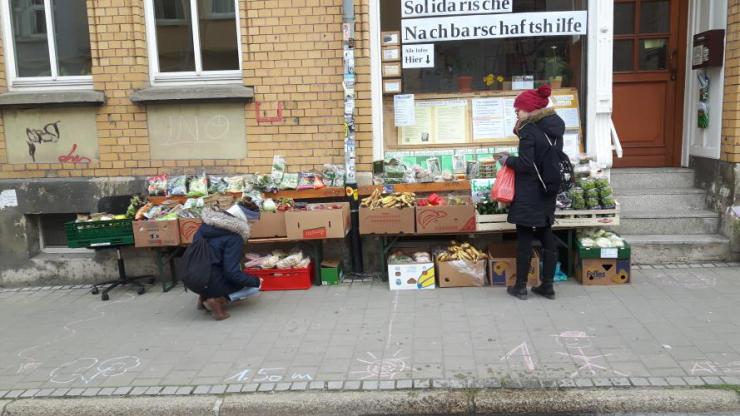
foodsharing Fair-Teiler am Magdelstieg
© foodsharing Jena
Food-Sharing Café
Since 2025, the city of Jena has been supporting the nonprofit organization fairwertbar e. V. in setting up a municipal food-sharing café. At the Fichteplatz meeting place, a new space for sustainable interaction, exchange, and collective action against food waste has thus been created.
Rescued food is regularly shared at the café. In addition, cooking events, workshops, and discussion sessions focused on climate-friendly and resource-conserving lifestyles take place there.
With this funding, the City of Jena is consistently implementing its sustainability strategy and climate action plan. Both call for supporting sharing initiatives and providing spaces for sustainable projects.
“With the Foodsharing Café concept, we’re not only creating a place where rescued food is put to good use, but also a space for connection, exchange, and sustainable action,” says Dirk Lange, Director of Urban Development and Environment for the City of Jena. “In this way, we combine sustainability with active community engagement and strengthen the sense of togetherness in our city.”
Jena Plastic-Free
Why Plastic Is a Problem
It’s hard to imagine everyday life without plastic—yet it’s often used only once. Over 40% of all plastic products are single-use items. This results in enormous amounts of waste worldwide. In Jena, approximately 34 kg of lightweight packaging was generated per resident in 2020. In total, Kommunalservice Jena collected 3,721 metric tons —enough to cover the entire market square.
Plastic does not decompose. As it breaks down, it forms tiny particles known as microplastics (smaller than 5 mm), which are carried by wind, rain, and rivers into the environment—even into snow samples in the Arctic. When plastic enters bodies of water, it harms animals and ecosystems. Many marine animals and birds mistake plastic for food. Microplastics can also bind to pollutants, which then enter the food chain via animals.
The long-term effects on humans have hardly been studied to date. One thing is certain: the less plastic we use, the better it is for the environment, animals, and ourselves.
Alternatives to Single-Use Products
Paper instead of plastic?
Unfortunately, it’s not that simple. Paper bagsdon’t havea better environmental footprint:
- Their production consumes a lot of water and energy.
- New fibers are usually used instead of recycled paper (Tip: look for the Blue Angel label ).
- Strength requires more material and chemicals.
A paper bag must be used at least three times as often as a plastic bag to be on par with it.
“Bioplastic”isn’t a solution either—it decomposes too slowly and competes with food production, since these bags are often made from cornstarch. While corn is a renewable resource, there’s a risk that the cultivation of renewable resources will compete with food and feed production. And their production requires a considerable amount of energy. Furthermore, bioplastic bags take too long to decompose in composting facilities and are therefore, in practice, neither composted norrecycled.
Conclusion: It’s best to avoid single-use bags—regardless of the material—or to reuse them multiple times.
Reusable Instead of Disposable
By introducing a deposit on single-use cans and bottles for certain beverage categories, the federal government sought to increase the rate of reusable containers. This goal was not achieved. On the contrary: year after year, the share of beverages sold in reusable bottles is declining. At 42%, the reusable rate hit a new low in 2017. Yet reusable options are an environmentally friendly alternative—not just for single-use beverage bottles. Reusable nets are now also frequently offered for loose fruits and vegetables.
According to the Society for Packaging Market Research (GVM), single-use products such as takeout packaging and disposable tablewareare the cause of high and rising waste volumes. Packaging and tableware made of paper or cardboard are not an environmentally friendly alternative here either. Here, too, it’s better to avoid rather than replace.
Conclusion: If a replacement is necessary, bring your own coffee mug for takeout coffee or use reusable tableware or containers.
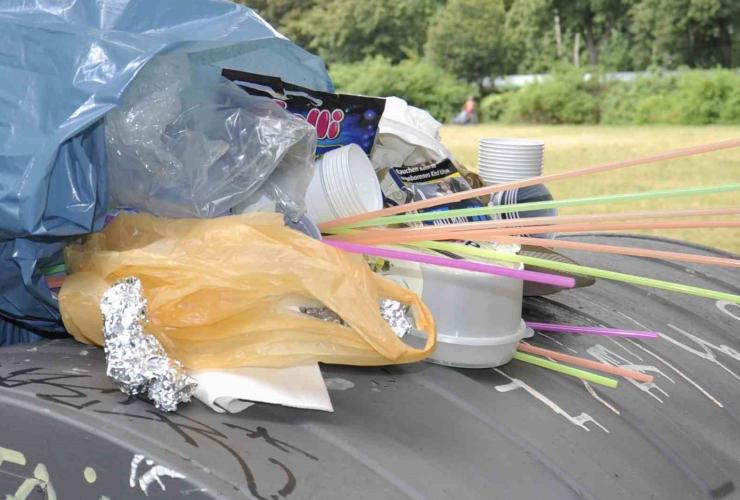
Verpackungsmüll auf Mülltonne
© KSJ
What we can do in Jena
1. Shop without packaging
Whether it’s large supermarket chains or the small shop around the corner, many stores now offer products completely free of plastic packaging. This can save vast amounts of packaging material for everyday items. There are also many options for shopping without packaging in Jena.
Simply leave the outer packaging for fruits, vegetables, or other products at the store. Retailers are required to provide appropriate collection bins for this purpose. This way, you won’t end up transporting waste, and both retailers and manufacturers will have to address the problem.

Lebensmittel in Gläsern verpackt
© Pexels
2. Shop sustainably with durable cloth bags
Don’t forget your cloth bag when you go shopping—reusable bags are a simple way to help protect the environment. Every time you use one, you save resources and reduce waste.
Bags that last a long time are particularly eco-friendly: A cloth bag only becomes more climate-friendly than a plastic bag after about 131 uses—so it’s definitely worth bringing it along regularly!
If you have unused cloth bags at home, you can also donate them and help ensure they’re reused.
3. Refill Stations
Carrying a reusable water bottle with you when you’re out and about not only reduces plastic waste but also saves you money. The concept behind Refill Deutschland is simple: Any store with a Refill sticker will fill your own bottle with tap water for free.
Under the motto “Bring your water bottle! Protect our environment! Drink enough water! Live healthy! Save money!” the goal is to reduce plastic waste and protect our environment. Many stores in Jena are already participating. You can finda map of all refill stations in Jena under Links.
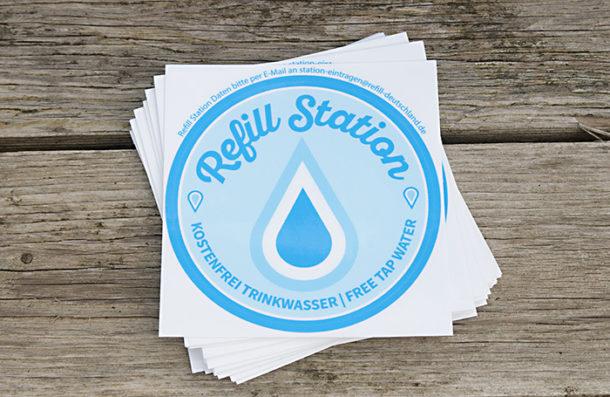
Refill-Aufkleber
© Refill Deutschland
4. Reusable Packaging
Whether you’re grabbing coffee on the go, having a midday snack, or shopping: reusable is always the better choice. In Jena, you can use your own cups or reusable systems like “RECUP,” “Vytal,” “FairCup,” etc., at many cafés and bakeries—this way, less waste ends up in the trash. You can also save a lot of packaging at the supermarket by using reusable bottles and returnable jars. Consistently choosing refillable alternatives protects the climate and strengthens regional economic cycles. Of course, your own reusable cups and containers are best.
5. Cook from scratch: Avoid plastic packaging in ready-made products
Cooking for yourself isn’t just healthier—it’s usually more sustainable, too. You can find fresh ingredients at Jena’s weekly markets, farm stands, or zero-waste stores—all without any single-use plastic. By avoiding ready-made products, you reduce packaging waste, cut down on transportation, and support local producers. Plus, cooking together is fun and raises awareness of what we eat every day.
6. Wear clothes longer: Shop mindfully, buy secondhand
Fashion doesn’t have to be constantly new—wearing clothes longer conserves resources and reduces waste. In Jena, there are numerous secondhand shops, clothing swap parties, and online platforms where well-preserved items find a second life. When buying new items, look for durable materials and fair production conditions. Small repairs or upcycling projects extend the life of your favorite clothes and turn them into truly one-of-a-kind pieces.
7. Cosmetics Without Microplastics
Avoid cosmetic products that contain tiny plastic particles (so-called microplastics) or liquid plastics. These are used, for example, in exfoliants, shower gels, or skin creams. To identify and avoid cosmetics containing plastic particles, downloadourfree ToxFox app, which detects harmful substances and microplastics in products with a simple scan of the barcode.
8. Collect trash
Join the annualSaalePUTZcleanup or organize your own cleanup events. Kommunalservice Jena (Phone: 0049 3641 4989‑250;E-Mail:vertrieb@jena.de) is happy to support you with:
- Loaner litter grippers, trash bags, and gloves
- Containers and waste pickup
- Environmental education programs
- Public relations support for cleanup campaigns
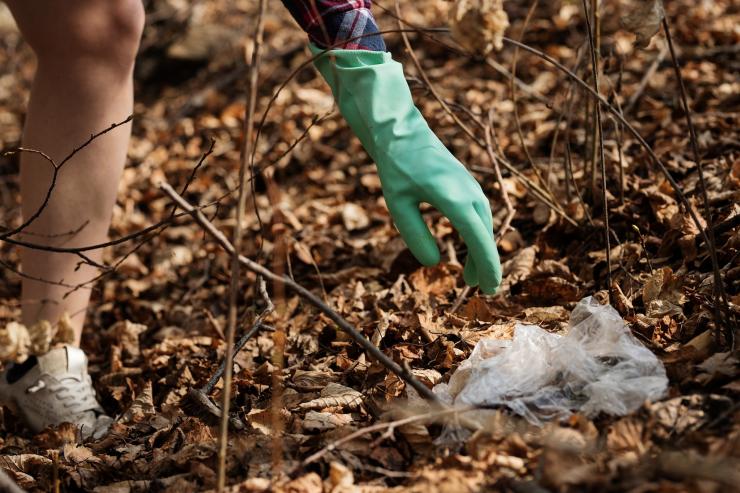
Plastiktüte liegt in der Natur
© Anastasia Gepp auf Pixabay
Engagement and education
The 2021 Children’s & Youth Environmental Award highlighted eleven creative projects under the motto “Less is more—how we avoid waste.” Kindergartens, schools, and clubs in Jena demonstrated how resource conservation and environmental protection can be put into practice from an early age. You can find press reports on this under “Links.”
Together, we’re making Jena plastic-free—step by step toward a clean, sustainable city.